Learning data alone? Why most self-taught learners quit, and the fix
Most people who start learning data analysis alone quit within months, and it's rarely about talent. Here's what solo learning is missing, and the three cheapest ways to fix it.
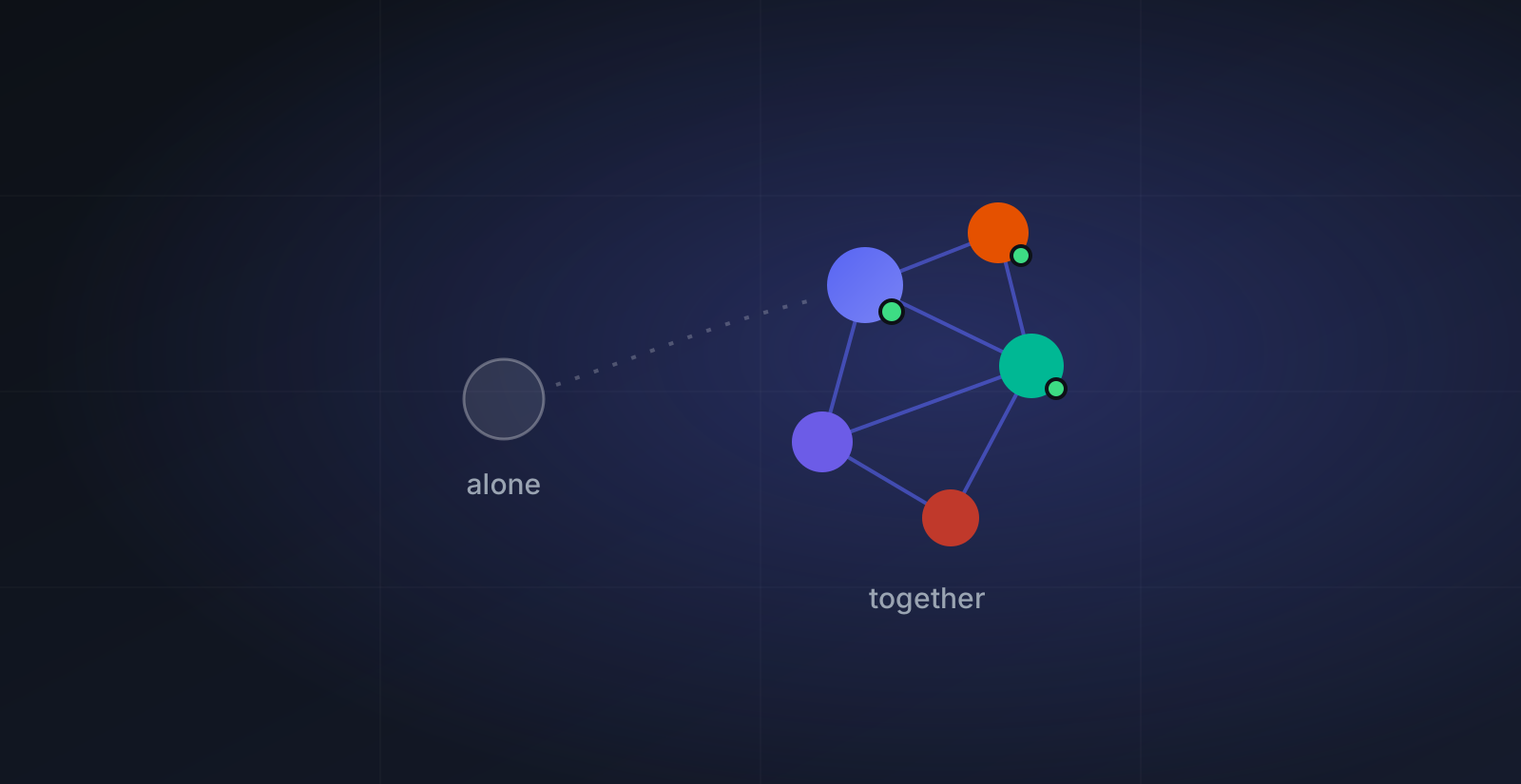
Here's the uncomfortable pattern: someone decides to become a data analyst, buys a course, grinds hard for three weeks, hits their first real wall, has no one to ask, loses a weekend to a single error message, and quietly stops. Not because they weren't smart enough. Because they were alone. If that trajectory feels familiar, this article is about why it happens and the cheapest way out of it.
The completion problem nobody puts on the landing page
Online course platforms sell enrollment, not completion, and the gap between the two is enormous. Studies of MOOCs have repeatedly found that only a small single-digit percentage of people who start a course ever finish it. Talent doesn't explain a dropout rate like that. Structure does.
Think about what a solo learner is actually missing compared to, say, a bootcamp student or a junior on a team:
Someone to ask
On a team, a stuck junior asks the person next to them and loses five minutes. Alone, you lose an evening to a Google spiral, and enough lost evenings become quitting. Speed of unblocking is the single biggest hidden variable in learning data.
Feedback on your work
Your query runs. Is it good? Your dashboard renders. Would a hiring manager wince? Without another set of eyes you can't calibrate, so you either overestimate yourself or, more often, assume you're behind everyone.
Accountability
No one notices if you skip a week. Then a month. Courses don't call you. The absence of anyone noticing is exactly why streaks die quietly.
Proof you're progressing
Tutorials feel like progress while you watch them. Without ranked checkpoints or shipped projects, you have no external signal that you're actually getting better.
"Self-taught" doesn't mean solo
The self-taught analysts who actually land jobs almost all describe the same shape of journey: free or cheap materials, yes, but surrounded by people. A community where they asked questions. Projects shared in public. Feedback that stung a little and improved the work a lot.
Self-taught should describe who paid for your education, not how many humans were involved in it. The learners who treat it as a vow of solitude are the ones the completion statistics are made of.
Your problem is almost never the concept. It's the forty minutes you spend stuck on something a human could unstick in ninety seconds.
The fix costs nothing: three moves
Join one active community
Not eight servers you'll mute. One room where people will learn your name. We compared the best data Discord servers in 2026 if you want options, and ours is open to everyone, no account needed.
Attach yourself to a ritual
Motivation is unreliable, rituals aren't. A recurring event you show up to every week, like the D8A weekly challenge, keeps you in the game during the weeks you'd otherwise drift.
Ship in public
Build portfolio projects and post them where people will see them. Public work creates gentle pressure to finish and gives reviewers something concrete to improve.
When you're stuck, give it 20 focused minutes on your own. If you're still stuck, post the error, what you expected, and what you tried in your community's help channel, then keep working on something else. You'll usually have an answer before the frustration would have ended your session.
What this looks like in practice
Here's the weekly shape that turns a solo grind into something sustainable. It costs zero euros and roughly one extra hour a week:
- 1
Monday: play the weekly challenge
Two minutes, six questions, a ranked score. It's a tiny commitment that restarts your engine every single week, and your handle on the leaderboard is a public streak you won't want to break.
- 2
Midweek: build, and ask when stuck
Work on your current project. Apply the 20-minute rule ruthlessly. Every question you ask in public also teaches the ten silent people with the same problem.
- 3
Weekend: post what you shipped
A finished project step, a chart, even a failed experiment. Progress that someone else witnesses is progress that tends to continue.
The difference between the people who become data analysts and the people who almost did is rarely the course they picked. It's whether anyone was in the room with them. Pick your room. If you want one where the weekly challenge, the leaderboard, and your portfolio all live in the same place, here's a tour of the D8A Discord.