The data analyst roadmap for 2026: skip the 50-step lists, build 3 projects
Most data analyst roadmaps are a wall of tools you will never finish. Here is a shorter, project-based roadmap that gets you to a portfolio recruiters can open, in the order that actually matters.
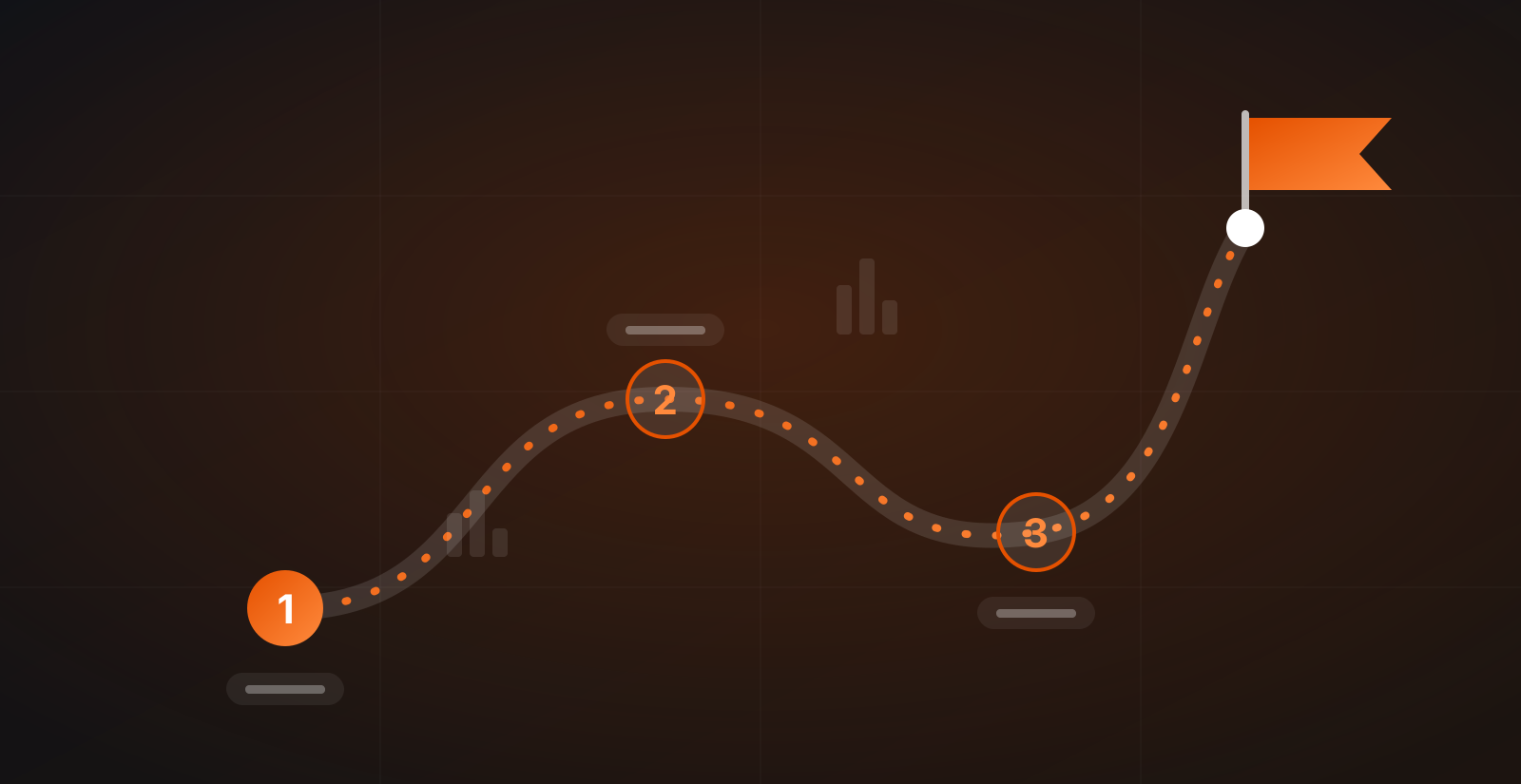
Search "data analyst roadmap" and you get a wall of tools. Excel, SQL, Python, R, Tableau, Power BI, statistics, machine learning, big data, cloud. It looks thorough. It is actually the fastest way to quit.
This is the role-focused companion to our pillar guide on what a good roadmap to learn data analysis looks like. That one explains why most roadmaps are broken. This one gives you the short version to actually follow in 2026, in order, with a finished portfolio as the goal.
Why the long roadmaps fail
The typical data analyst roadmap is a list of twenty tools with no priority and no end state. It treats "learn Tableau" and "learn SQL joins" as equal-sized boxes to tick. They are not. And because nothing on the list produces something you can show, you finish a course, feel no closer to a job, and start a different course. That loop is tutorial hell, and it is where most aspiring analysts get stuck for a year.
A roadmap should not be measured in videos watched. It should be measured in projects finished. The roadmap below has exactly three checkpoints, and each one ends with something a recruiter can open.
The 2026 data analyst roadmap, in three checkpoints
- 1
SQL plus one finished analysis
SQL is non-negotiable and comes first. Every analyst job requires it and most interviews test it live. Learn SELECT, WHERE, GROUP BY, and JOINs on a real dataset, then turn one question ("which segment is driving the revenue drop?") into a short written analysis. That write-up is your first portfolio piece.
Questions to ask- Can I pull, filter, group, and join real tables without looking up syntax?
- Can I answer a business question end to end?
- Is the result written up so someone else understands it?
- 2
One analysis language plus one BI tool
Add Python (pandas) for cleaning and analysis that SQL cannot do alone, and one BI tool. Power BI and Looker Studio are the most in-demand in 2026. Do not learn both deeply. Pick one, build a real dashboard on a real dataset, and make sure it answers a decision, not just displays numbers.
Questions to ask- Can I clean and reshape a messy dataset in Python?
- Can I build a dashboard a non-analyst can read?
- Does the dashboard answer a question, not just show charts?
- 3
A capstone that looks like the job
Tie it together with one larger project: raw data in, cleaning, analysis, a dashboard or report out, and a short summary of what you would recommend. This is the piece you put at the top of your portfolio and walk through in interviews. It is worth more than the other two combined.
Questions to ask- Does this mirror a task a real analyst is paid to do?
- Can I explain every choice in an interview?
- Is it public, documented, and easy to open?
That is the whole roadmap. Notice what is missing: no "learn R and Python and SAS", no machine learning, no Hadoop. Those are not on the path to your first analyst job in 2026. You can add them later, once you are hired and being paid to learn.
What to learn, and what to skip
Most of the anxiety around roadmaps comes from not knowing what is safe to ignore. Here is the honest split for a first data analyst role.
- SQL: joins, aggregation, window functions
- Python with pandas for cleaning and analysis
- One BI tool (Power BI or Looker Studio), in depth
- Clear written communication of findings
- How to document a project on GitHub
- A second language (R, SAS) you will not use
- Machine learning and deep learning
- Big data tooling (Spark, Hadoop)
- Five visualisation tools instead of one
- Memorising theory with no project attached
The pattern is simple. Go deep on the few things every analyst job actually uses, and prove each one with a project. Breadth is what you add after you are employed, not before.
Why "build 3 projects" beats "learn 20 tools"
A recruiter spends seconds on a CV. A certificate tells them you watched a course. A portfolio of three finished projects tells them you can do the work, and gives them something concrete to ask about. That is the entire game for a career switcher with no prior data title: you are trading proof for the interview you cannot get on credentials alone.
So the roadmap is not really about tools. It is about producing three pieces of evidence in the right order, learning exactly enough of each tool to finish the project in front of you, and stopping there.
How to actually follow it without stalling
The roadmap is short. Following it is still the hard part, because building real projects from scratch means choosing a dataset, scoping a question, getting unstuck alone, and knowing when a project is "done". That is exactly where self-taught analysts lose months.
This is what D8A is built for. You pick one of four paths, and instead of a tool checklist you get a sequence of real, guided projects in the order above. Each one is auto-validated when you finish it and becomes a public portfolio piece, so the roadmap and the portfolio are the same thing. You are never staring at a blank dataset wondering if you did it right.
The roadmap is three checkpoints. The only thing left is to start the first one.